
 EN
EN


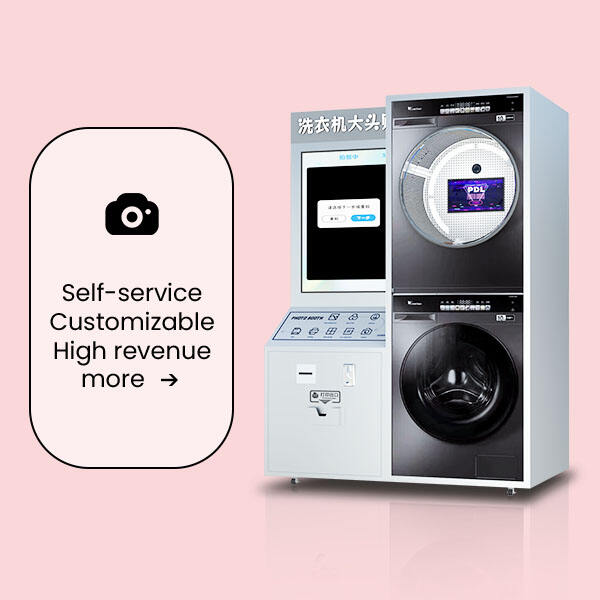
Self-service photo booths are a fantastic way to have fun and they have been found in such places as shopping malls, weddings, corporate events, amusement parks, and even airports over the last several years. Their popularity has skyrocketed. With the booths featuring a small footprint, interactive touch screens, on-the-spot printing, and social media sharing, the booths add up to both branding and fun value. However, among the entrepreneurs and investors, one essential question is still left unanswered: Is a self-service photo booth a good money-maker? The short answer is yes--but profitability depends on a weigh of factors.
Understanding the Self-Service Photo Booth Business Model
A self-service photo booth is a concept of a fully automated system which is user-operated, hence no external assistance is required. The prime sources of revenue are from pay-per-use, event rental, brand advertising, or long-term commercial placement. In owners business models, revenue can be generated from:
- Photos pay-per-use in malls, cinemas, and tourist areas
- Hourly or daily rental for weddings and parties
- Brand activations and marketing events by corporates
- Retail venues leasing for the long-term
- Paid upgrades for digital photo sharing
One of the significant factors behind the photo booth industry's attraction to both small startups and large event companies is the flexibility of its revenue streams.
Startup Costs and Initial Investment
The initial capital required to start a self-service photo booth business is relatively low when compared to that of other business ventures. A typical commercial-grade booth of standard quality usually is between $2,500 and $10,000, depending on what parts used in the setup, like camera, touch screen, lighting source, printing module, or software.
The additional expenses for a start-up may be:
- Transportation and setup equipment
- Initial marketing and branding
- Software licenses and system updates
- Insurance and business registration
In general, the majority of the operators can afford the total market entry cost which is less than $12,000, and therefore the venture is open to small business owners.
Revenue Potential and Profit Margins
Making a profit depends mostly on the usage of the booths. In short, a single booth can perform 30-80 operations a day which brings about a daily revenue ranging from $150 to $400 in case of $5 user sessions. On the other hand, a wedding or corporate event can generate from $400 to $1,200 just for a short period of 2-3 hours of operating the booth.
Moreover, since the costing of the booth is relatively cheap and there is mostly paper, ink, electricity, and routine maintenance, the profit margins can be at very high levels. A good number of operators assert that their gross profit margin is between 60% and 80%, after the break-even point of the booth period has been reached.
Often, the return on investment (ROI) timeframe could be as short as three to six months, particularly in densely populated urban areas or the event peak season, where the booth engagement is very high.
Key Factors That Influence Profitability
While the figures look good, not a single self-service photo booth can turn out to be profitable automatically. The most influential factors are location, market demand, booth quality and features, pricing strategy, maintenance and support.
1. Location: The hight traffic of walking people is the most crucial element of daily revenue generation. Places like shopping malls, tourist attractions, cinemas, airports, and family entertainment centers are usually home to the best-performing photo booths.
2. Market Demand: A place with a strong event industry, wedding market, and tourism will most definitely support higher revenues.
3. Booth Quality and Features: User-interaction features such as the creation of GIFs, AR filters, social media sharing, QR code delivery, payments integrations attract to use the booth more often.
4. Pricing Strategy: The essential thing about pricing is to get the price right. If it is too high, usage will be decreased; if it is too low, profit margins will be eroded.
5. Maintenance and Downtime: Dependable hardware and thus always available technical support are among the factors which prevent money that could be earned during the time of the machine being out of order.
Event Rentals vs. Permanent Placement
Firstly, there are two main operating models that can be clearly distinguished, and different profit patterns are presented by each of them:
- Permanent placement is the source of consistent daily revenue. Whereas the amount of money gained per day may vary, contracts of a long duration with shopping malls and entertainment venues are assuring a steady flow of money.
- Event rentals, on the contrary, give rise to higher one-time profits and more excellent branding opportunities; however, they are heavily dependent on active marketing and scheduling.
Some of the successful operators have mixed strategies, thus utilizing both approaches in their business to be able to have consistency as well as high-margin possibilities.
Risks and Challenges
Like any other business, the self-service photo booth comes with a bundle of risks:
- The competition is fierce because on the one hand the equipment is getting cheaper while on the other hand more people are entering the same niche.
- High-traffic locations may require to share a percentage of your revenue with mall operators to permit you to operate there.
- If your equipment is going to be damaged or vandalized, maintenance costs will rise.
- Technology moves very fast and you will have to keep upgrading your equipment.
Still, the risks involved are controllable by having proper planning, choosing the right location, insurance, and after-sales technical services.
Digital Expansion and Brand Value
The present-day self-service photo booths are not merely restricted to the producing of photos on paper. By digital media, e.g., sharing via email, customized templates, cloud storage, companies now are enabled to gather valuable user data for marketing from which brands get to enjoy. So, they rent the booths for their promotions because users become active participants with their logos and messages.
Besides simple printing of photos, this added marketing value is substantially upping the rental prices and client relationships in the long run, thus paving the way for new revenue streams.
Scalability and Long-Term Growth
The self-service photo booth business is one of the most scalable businesses which is a strong point in its favor with just one profitable booth model set up, expanding to multiple units becomes a simple task. Gradually, operators can develop a regional and even a national network of booths with centralized software control and management.
As the business increases by the number of booths, the level of operational efficiency also rises, while per-unit costs decrease-which, in turn, is a lead to even more overall profitability.
Final Verdict: Is a Self-Service Photo Booth Profitable?
Indeed, if the management is done right, a self-service photo booth can generate a substantial profit. It is still one of the most attractive small-to-medium investment businesses nowadays, due to the low costs of operation, the flexible modes of revenue, the strong demand from events and public venues, and the high-profit margins.
The success comes from smart location selection, using up-to-date equipment, doing marketing efficiently, and applying maintenance regularly. For entrepreneurs who are looking for a business that is made up of technology, fun, and steady cash flow, the self-service photo booth industry is still there with a good profit potential in today's experience-driven marketplace.